Scandinavian Interior Design: How to Get the Look (2026 Guide)
Everything you need to know about Scandinavian interior design — the core philosophy, colour palette, materials, furniture, lighting, and how to achieve it room by room on any budget.
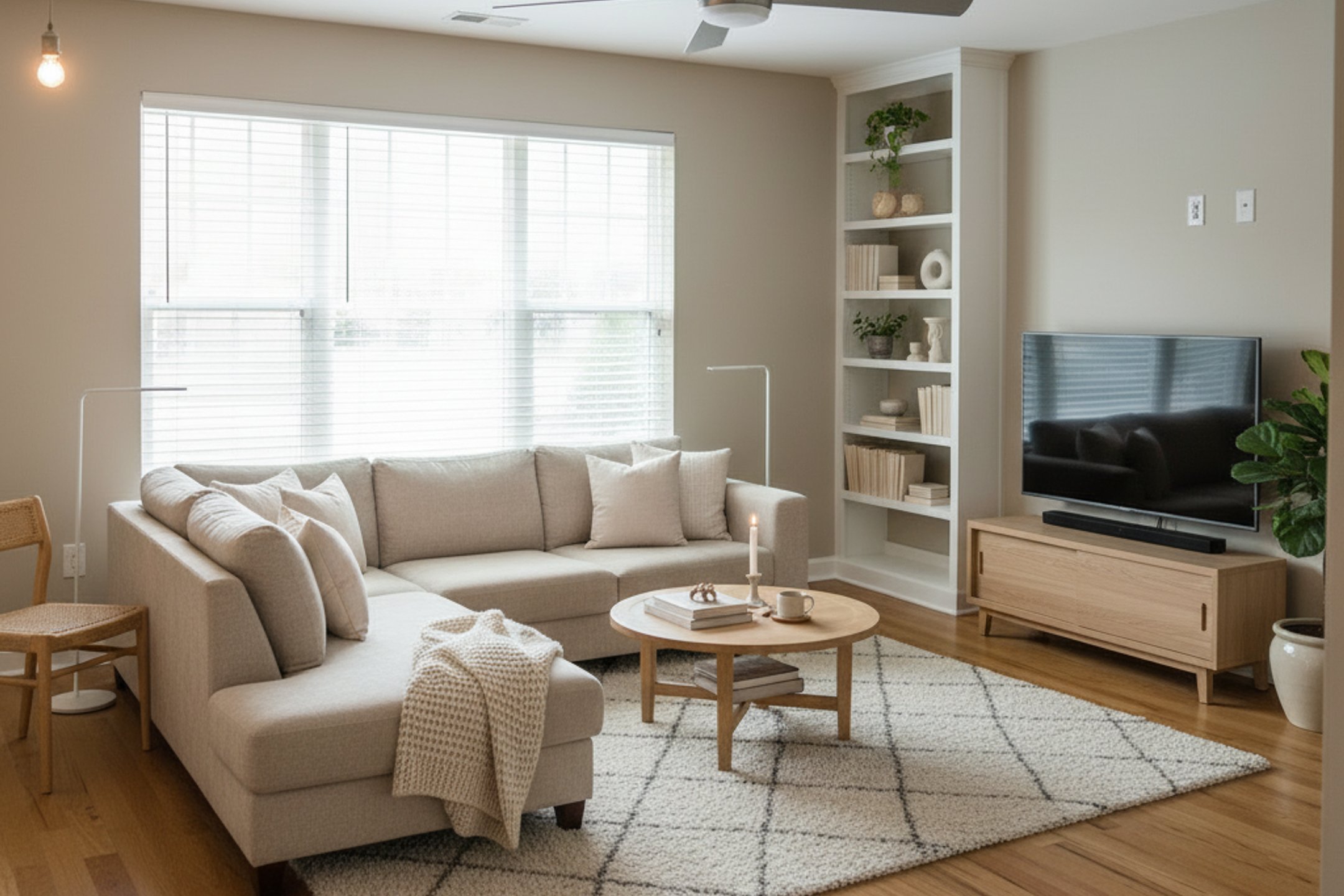
Scandinavian interior design has dominated mood boards and showrooms for over a decade — and it still does. Not because it is a passing trend, but because it is built on timeless ideas: natural light, honest materials, and spaces that genuinely feel good to live in.
This guide walks you through everything. The philosophy, the palette, the materials, the key furniture pieces, the lighting strategy, room-by-room breakdowns, budget tips, and how to visualise it all before you spend a single euro.
The Philosophy Behind Scandinavian Design
Understanding why the Scandinavian aesthetic looks the way it does makes it much easier to apply correctly. There are three concepts you will see referenced everywhere, and they are worth knowing properly.
Hygge (Danish and Norwegian)
Hygge (roughly pronounced "hoo-gah") is a Danish and Norwegian concept that describes a feeling of cosiness, togetherness, and well-being. In interior terms it translates to: warm lighting, soft textures, natural materials, candles, and an environment that makes you want to slow down.
Hygge is the reason Scandinavian interiors feel warm despite using a largely neutral palette. The warmth does not come from colour — it comes from texture, layering, candlelight, and materials like wool and raw oak.
Lagom (Swedish)
Lagom is a Swedish concept meaning "just the right amount" — not too much, not too little. Applied to interiors it means: enough furniture to feel comfortable but not so much that the room feels crowded. Enough decoration to feel personal but not so much that it feels cluttered. Lagom is why well-executed Scandinavian rooms feel instantly calming.
Function First
Scandinavian design was heavily influenced by the mid-century Modernist idea that form should follow function. Furniture pieces are selected for what they do, not just how they look. Shelving is open because it is easier to access and keeps you accountable for what you own. Storage is built in because visible clutter is the enemy of calm.
This does not mean your home should look like a showroom. It means every item should earn its place.
The Scandinavian Colour Palette
Getting the colours right is the single most important step. The palette is restrained, but it is not boring if you understand how to layer it.
The Base (70–80% of the room)
The base is always light. But "light" in Scandinavian design does not mean brilliant white. Harsh, cool white reads as clinical and cold — the opposite of what you want.
What to use instead:
- Warm broken white — Think off-white, chalk, or a warm cream. Farrow and Ball's "All White" or "Wimborne White" are frequently referenced. These have enough warmth to feel soft without reading as beige.
- Light warm grey — A grey with undertones of taupe or greige rather than blue. Used on one feature wall or for larger furniture pieces.
- Sand and pale oat — These read somewhere between white and beige, and they add warmth without committing to a colour.
Apply your base to: walls, large upholstered pieces (sofa), fitted storage, and large rugs.
The Mid-Tones (10–20% of the room)
Mid-tones appear in secondary furniture, smaller textiles, and architectural elements like window frames or skirting boards.
Good mid-tones in the Scandinavian palette:
- Medium warm grey
- Washed natural linen
- Driftwood tan
- Pale sage or eucalyptus green (this is having a significant moment in 2026 Scandinavian interiors)
Accent Colours (5–10% of the room — maximum)
This is where people most often go wrong. Scandinavian interiors do use accent colours, but sparingly and always in muted tones.
Classic Scandinavian accents:
- Dusty navy or slate blue — Timeless, works in almost any room
- Muted sage or moss green — Connects to nature without being loud
- Terracotta or burnt rust — Adds warmth, especially in textiles
- Charcoal — Used as a grounding accent on lamp bases, frames, and hardware
Rule: Choose one or two accent tones. Introduce them through cushions, ceramics, a throw, or a single piece of furniture. Not the walls. Not the sofa.
Materials and Textures
The Scandinavian palette is neutral, so materials and textures carry the visual interest. This is where the richness comes from.
Wood — the Most Important Material
Light wood is non-negotiable in Scandinavian design. The species most commonly used are:
- Oak — The most popular. Warm grain, ages beautifully. Available as solid or engineered.
- Birch — Lighter and more uniform in tone than oak. Often used for furniture with a Bauhaus or mid-century influence.
- Ash — Similar grain to oak but slightly lighter and greyer.
- Pine — More rustic. Common in country-inflected Scandinavian spaces.
What to avoid: dark-stained wood (walnut, dark oak, mahogany). These read as heavy and break the lightness principle immediately.
Finish: untreated, lightly oiled, or a very pale matte lacquer. Never high-gloss.
Textiles — Where the Hygge Lives
Textiles are the most affordable way to transform a space and the most powerful tool for adding warmth.
Wool: The hero textile. As cushion covers, throws, rugs, and even wall hangings. Chunky knit throws in natural, cream, or muted grey are a Scandinavian staple.
Linen: Used for curtains, duvet covers, cushion covers, and table linens. Slightly rumpled linen reads as deliberately casual — not sloppy. It is the antithesis of stiff formality.
Cotton: Softer and more uniform than linen. Good for sofa upholstery and bed linen.
Sheepskin: A single sheepskin thrown over an armchair or draped on a bench is one of the easiest ways to add hygge.
Rattan and wicker: More common in warmer-weather Scandinavian interpretations. Works particularly well as pendant lampshades, baskets, and occasional side tables.
Stone and Ceramic
Matte ceramic in warm whites, clay, and sage. Stone countertops in pale grey or warm travertine. These materials appear in kitchens and bathrooms and add a quiet richness.
Key Furniture Pieces
You do not need to replace everything. These are the pieces that define the look.
The Sofa
- Shape: Clean, geometric lines. No overstuffed cushions. No curved, slouchy profiles (that is more French or mid-century American).
- Colour: Light grey, natural linen, cream, or warm white.
- Leg style: Visible legs in light wood or dark metal — not sitting flat on the floor.
- Seat depth: Relatively shallow (85–90cm depth) so the room does not feel eaten up by the sofa.
The Coffee Table
Simple and low. Round or rectangular. Light oak or birch. No drawers, no decorative flourishes. A clean, honest surface.
A tray on top of the coffee table is the Scandinavian way of creating the appearance of organisation — group your candles, a book, and a small ceramic piece on the tray.
Storage and Shelving
Open shelving is central to Scandinavian interiors, but it is styled rather than stacked. The 50% rule: no shelf should be more than halfway full. Leave breathing room.
Style shelves with: books stacked both upright and horizontally, a plant or two, a ceramic piece, and a small framed print or card.
Closed storage is used for anything you cannot style — hide it behind clean-fronted doors in white or light wood.
The Armchair
The one piece where you are allowed to make a statement. A classic Scandinavian armchair — think the Danish Papa Bear chair or any number of mid-century Scandinavian designs — adds character without disrupting the overall calm. A sheepskin draped over it adds hygge instantly.
Dining Table and Chairs
Round or oval tables in solid oak. Bentwood chairs (the classic Scandinavian choice) or upholstered chairs in linen or boucle. Avoid matching sets — a mix of chair styles in a consistent palette reads as more lived-in and personal.
Lighting Strategy
Light is arguably the most important design element in Scandinavian interiors. This is not accidental — Scandinavian countries deal with extremely short winter days, and the design culture evolved around maximising and celebrating light.
Maximise Natural Light
- Use sheer linen curtains or voile rather than heavy drapes. Let light through even when curtains are drawn.
- Do not block windows with tall furniture.
- Use mirrors strategically — opposite a window, a large mirror doubles the perceived light in a room.
- Keep windowsills clear or minimal. A single plant on the sill is fine. A collection of ornaments is not.
- Pale walls reflect light; dark walls absorb it.
Layered Artificial Lighting
This is the rule most people get wrong in Scandinavian interiors: do not rely on a single overhead light.
The Scandinavian approach uses multiple smaller light sources at different heights:
- Table lamps (50–75cm height) — Placed on side tables, sideboards, and window sills. Warm bulbs (2700K). These create pools of soft light rather than flooding the whole room.
- Floor lamps (140–175cm) — Positioned in corners or beside reading chairs. An arc lamp over the sofa is a classic Scandinavian choice.
- Pendant lights — Hung low over dining tables and in reading corners. Simple paper or rattan shades, or sculptural metal designs.
- Candles — Central to hygge. Group small tea lights in simple glass holders, or use taper candles in ceramic holders. 5–8 candles in a room transforms the atmosphere completely on a dark evening.
Avoid: cold white LED (4000K or above). Always warm (2700K) or amber tones.
What to Avoid
Knowing what breaks the look is as useful as knowing what creates it.
Clutter — The number one enemy of the Scandinavian aesthetic. If it does not have a function or you do not love it, it should not be in the room.
Dark, heavy woods — Walnut, dark oak, or mahogany read as completely opposite to the Scandinavian approach. One dark wood piece can ground a room, but a room full of dark wood is simply not Scandinavian.
Loud patterns — Large floral prints, bold geometric wallpapers, strong graphic patterns. Scandinavian pattern language is subtle: small geometric prints, simple stripes, nature-inspired motifs in muted tones.
Shiny finishes — High-gloss furniture, mirrored side tables, chrome hardware. Matte finishes throughout.
Matching furniture sets — Buying a sofa-and-armchair set or a complete bedroom package tends to look showroom-finished rather than considered. Mix pieces within a consistent palette instead.
Too many small decorative items — Three carefully chosen ceramics on a shelf look deliberate. Twelve small ornaments look like a car boot sale. Edit down.
Room-by-Room Breakdown
The Living Room
The living room is where the Scandinavian aesthetic is most fully expressed.
Starting point: Walls in warm white. A single feature wall — the one behind the sofa — can go slightly deeper (a warm greige or very pale sage).
Flooring: Light-stained oak or pale natural wood. If you are working with a darker floor, a large natural wool rug (cream, oat, or pale grey) will visually lighten it.
Sofa placement: Pull it slightly away from the wall — even 15cm makes a difference. Float the arrangement around a coffee table.
Lighting: One floor lamp beside the sofa (arc style works well), two table lamps on side surfaces, and a pendant or low ceiling fitting for ambient light. 6–10 candles for evenings.
Textiles: Two or three cushions in natural linen plus one or two in a contrasting texture (wool, boucle). A wool throw draped on the sofa arm. A natural-fibre rug.
Greenery: One or two plants. A larger statement plant (olive tree, fiddle-leaf fig) in the corner or beside a window. A smaller ceramic pot on the coffee table or shelf.
The Bedroom
The Scandinavian bedroom prioritises rest. It is quieter and more stripped-back than the living room.
Bed frame: Low platform in light oak or white-painted wood. Simple slatted headboard or no headboard at all. Avoid ornate upholstered headboards.
Bedding: White or off-white linen duvet cover. Natural-coloured linen pillowcases. One or two textured cushions. A folded wool throw at the end of the bed.
Colour: Keep the bedroom even more neutral than the living room. If you use an accent colour, introduce it only through textiles — a sage cushion cover, a dusty blue throw.
Lighting: No overhead light used in the evening. Bedside table lamps with warm bulbs. A simple pendant hanging low on each side of the bed is a popular Scandinavian approach.
Minimise surfaces: One or two items on the bedside table (lamp, book, a small plant). Nothing on the floor except a small rug beside the bed.
The Kitchen
Scandinavian kitchens are clean, practical, and considered.
Cabinet colour: White, off-white, or very pale grey as the dominant tone. A darker lower cabinet in slate or charcoal is a popular contrast (this is common in Danish kitchen design).
Countertop: Pale stone, light wood, or white composite. Butcher-block countertops in oiled oak read as warmly Scandinavian.
Hardware: Matte black or brushed brass. Never chrome.
Open shelving: One run of open shelving styled with ceramics, glasses, and a plant. The rest closed.
Textiles: A natural linen tea towel. A small ceramic pot with a herb or two on the windowsill.
Clutter: Keep the countertop as clear as possible. A coffee machine, a cutting board, and a fruit bowl are all a Scandinavian kitchen countertop needs.
Achieving the Look on a Budget
You do not need to spend a lot. The Scandinavian aesthetic rewards restraint.
Prioritise in This Order
- Paint the walls — The single highest-impact, lowest-cost change. Warm broken white transforms a room.
- Change the lighting — Replace overhead lighting with a floor lamp and two table lamps. Budget around €80–150 total.
- Add textiles — Two linen cushion covers, a wool throw, and a natural rug change the feel of a room dramatically. Budget: €60–120.
- Declutter — Free. Remove anything that is not functional or beautiful. This is genuinely transformative.
- Add plants — A large plant in a simple ceramic pot: €20–40.
- Candles — A pack of tea lights: €3. A few hours of atmosphere.
Where to Save and Where to Spend
Spend on: The sofa (you sit on it every day), a quality rug (it anchors the whole room), and good lighting.
Save on: Cushion covers and throws (update seasonally without guilt), shelving (IKEA's Billy and Kallax are Scandinavian staples for a reason), and decorative ceramics (charity shops, markets, and budget homeware stores are full of matte neutral pieces).
Second-Hand is Authentic
Many of the most celebrated Scandinavian furniture pieces are genuinely mid-century originals. Second-hand shops and online marketplaces are excellent sources for teak sideboards, bentwood chairs, and simple oak tables that fit the aesthetic perfectly and cost a fraction of new equivalents.
Before You Buy — Visualise First
One of the most common and expensive mistakes in any interior project is buying furniture before you know how it will look in your actual space.
A sofa that looks perfectly proportioned on a website can overwhelm a room. A paint colour that reads as "warm white" on a sample card can look cool and flat under your specific ceiling height and window placement. A rug that seems "large" in the shop can look like a bath mat on your living room floor.
The practical solution: visualise before you commit.
redomyroom.ai lets you upload a photo of your room — your actual room, with your actual proportions and lighting — and see it redesigned in a Scandinavian style in in about a minute. You can see how the light oak tones work with your floor, how a pale palette reads in your specific space, and whether the airy Nordic look you have been planning actually delivers what you imagined.
It is free to start: you get five preview credits when you sign up. No design expertise needed.
Try Scandinavian interior design on your room for free
Scandinavian Interior Design: A Quick Checklist
Use this to audit your space or plan your project:
Colour:
- Walls in warm white, broken white, or pale greige
- Maximum two accent colours, both in muted tones
- No bright or saturated colour on large surfaces
Materials:
- Light wood present (oak, birch, or ash)
- Natural textiles (wool, linen, or cotton)
- Matte finishes throughout (no chrome or high-gloss)
Furniture:
- Clean-lined sofa in neutral upholstery
- Simple coffee table in light wood
- Storage is hidden or carefully styled
Lighting:
- Multiple light sources at different heights
- Warm bulbs (2700K)
- Candles in the room
- Sheer curtains or none (not heavy drapes)
Feel:
- Room is uncluttered (lagom in practice)
- At least one plant
- Textiles layered for warmth
Score 13–15: You have genuinely nailed it. Score 8–12: A few targeted changes will get you there. Score below 8: Use this guide from the top.
Conclusion
Scandinavian interior design works because it is built on principles rather than trends. Light, nature, function, warmth — these are not design fads. They are the conditions under which people genuinely feel at home.
Start with the highest-impact changes first: paint the walls warm white, replace your overhead light with layered sources, add a wool throw and some candles. You do not need to renovate the whole house at once. Scandinavian design is specifically not about doing everything at once. It is about getting each thing right.
And when you are ready to see how it will actually look in your home — before moving any furniture, before ordering a single piece — visualise it first.